
History
Our charity has a 170-year history of igniting the potential in people in the Greater Toronto Area. From supporting service people during the First and Second World Wars to hosting food banks and vaccine clinics during the COVID-19 pandemic, our tradition of responding to pressing community needs endures. Today, you’ll find our programs and services at more than 500 locations across the GTA. See how we’ve been boosting well-being, promoting equity and helping people to shine, grow, lead, and give back.
2026
- The McDonald Family YMCA is proudly LEED Platinum Certified, achieving the highest possible rating by the U.S. Green Building Council. This certification recognizes the YMCA’s holistic approach to sustainability, including its commitment to environmental stewardship and innovative green building practices.
2025
- On July 15, 2025, The McDonald Family YMCA opened to the public in the heart of King West. It was brought to life thanks to the generosity of donors who contributed to the YMCA’s Strong Start, Great Future capital campaign, including Jenifer and Steve McDonald, whose visionary support made The McDonald Family YMCA a reality. The project was also made possible thanks to the City of Toronto.
2024
- On June 5, 2024, the YMCA of Greater Toronto received a transformational $10 million donation from The Barrett Family Foundation — the largest gift in the charity’s history. This pivotal donation will grow five critical programs for equity-deserving youth, including the YMCA Black Achievers Mentorship Program; newcomer and refugee youth groups and internships; the Youth for Entrepreneurship program; financial literacy programming; and an innovative, online, career exploration game to help education-disconnected youth re-engage with their futures.
- The YMCA at The David Braley Vaughan Centre and The Steve & Sally Stavro Family YMCA are certified LEED Platinum, receiving the top certification for green buildings in February 2024. Sustainability remains an important part of the YMCA's efforts to create vibrant, healthy communities.
2023
- The YMCA introduced Launchpad for Women Entrepreneurs, co-created with DMZ, a world-leading startup incubator based at Toronto Metropolitan University. The dynamic program empowers aspiring entrepreneurs by providing resources to start and grow a successful business.
- In August 2023, the Y launched Open Outdoors, an inclusive outdoor education program. It offers equity-deserving communities the chance to participate in free, educator-led, outdoor skill-building experiences. The program also aims to engage Indigenous youth and families in recognizing historical inequities tied to land access and underrepresentation in outdoor education.
- Lesley Davidson started her role as president and CEO of the YMCA of Greater Toronto on July 8, 2023. She is the first woman to hold this position in the charity’s 170-year history. Lesley's former positions at the YMCA include senior vice president of Health and Fitness and chief operating officer.
- A groundbreaking ceremony for the Bridletowne Neighbourhood Centre took place on June 19, 2023. This innovative community hub is a collaboration between the YMCA of Greater Toronto and United Way Greater Toronto. Vital programs and inclusive community spaces will be available under one roof, as a leading example of community-based wraparound support.
- Partially funded by the RBC Foundation, YMCA Ignite — a first-of-its-kind online learning platform — launched in partnership with YMCA BC. To start, it offers virtual leadership and development programs for youth across Canada, with long-term goals to make critical programs accessible to youth ages 15–29 in Black, Indigenous, and People of Colour (BIPOC) and rural communities, preparing them for future jobs.
2022
- The Steve & Sally Stavro Family YMCA opened on August 15, 2022. This 63,990-square-foot centre of community will positively impact the lives of thousands of people in its east Toronto community. It includes: a gym, pool, fitness studios and exercise areas, youth programs, and multi-purpose spaces, available to neighbourhood groups and programs outside of the Y. This Centre of Community was made possible thanks to the many donors who supported the YMCA's Strong Start, Great Future Capital Campaign, including The Steve & Sally Stavro Family Foundation. This Y is named for the Stavro family’s deep connection to the east Toronto community and their support of the YMCA, including a $1 million donation from The Steve & Sally Stavro Family Foundation. The centre's naming was also supported with a $2 million gift from an anonymous donor and numerous contributions from additional donors.
- At a ceremony on June 20, 2022, alongside the City of Vaughan and Vaughan Public Libraries, the YMCA of Greater Toronto marked the official opening of The YMCA at The David Braley Vaughan Centre. Located in the heart of Vaughan's emerging downtown core as part of the David Braley Vaughan Metropolitan Centre of Community, the new 77,000-square-foot YMCA features a full-sized gymnasium, two pools, including a 25-metre lap pool and program pool with hydraulic floor, whirlpools and steam rooms, a multi-purpose fitness room, and a state-of-the-art conditioning floor. It will also host summer camps and provide employment and volunteer opportunities.
- On March 28, 2022, the YMCA of Greater Toronto hosted a major announcement at the Brampton YMCA: the signing of an Ontario-Federal Child Care Agreement. We are committed to working with all levels of government to bring this agreement to life for YMCA child care families.
- We were honoured to receive our largest one-time gift from a donor: a transformational $5 million to our new Y in Vaughan from the David Braley Foundation. David Braley was a beloved champion for sport, health, and community. He touched countless lives as a philanthropist, business owner, and Canadian senator, and was appointed to the Order of Canada for his contributions to the Canadian Football League. Through his dedication to community-building and his leadership in sport, Mr. Braley made a profound mark on the communities he worked in. We’re proud to honour his legacy by renaming the VMC The David Braley Vaughan Centre.
2021
- In support of community health and efforts to stop the spread of COVID-19, the YMCA of Greater Toronto hosted COVID-19 testing and vaccination clinics at some of its locations.
- Raptors 905, the official G League affiliate of the Toronto Raptors, and the YMCA of Greater Toronto teamed up. Basketball lovers attended a free, virtual courtside chat that covered the sport's ability to boost motivation, teamwork, fitness, and connection.
2020
- While most Y locations were temporarily closed at times due to the COVID-19 pandemic, the YMCA of Greater Toronto continued to provide shelter for at-risk youth and developed virtual programs for people across the Greater Toronto Area. We stepped up with Emergency Child Care for health care and front-line workers, and supported food security efforts across the region.
- A five-year strategic plan: Ignite the Light (2020–2025) was launched, with a focus on promoting equity and boosting well-being.
"Vision: Vibrant communities where everyone can shine.
Mission: The YMCA of Greater Toronto is a charity that ignites the potential in people, helping them grow, lead, and give back to their communities.
Values: Inclusiveness. Integrity. Well-Being. Optimism. Respect. Kindness." - The YMCA of Greater Toronto officially launched The Bright Spot, an online community where older adults can shine. It offered everything from exercise classes and small online group discussions to trivia nights and mindfulness tutorials — all free of charge.
- The Toronto Symphony Orchestra and the YMCA of Greater Toronto delivered unique programming at a time when the pandemic highlighted the importance of focusing on our physical, mental, and social health.
- Canadian youth are reported to have among the highest cannabis use rates in the world, and following recent legalization, the YMCA of Greater Toronto stepped up with a new, national, Health Canada-funded program to educate youth ages 12 to 24 about this important topic.
- The YMCA of Greater Toronto and ParticipACTION teamed up to help Canadians stay active and healthy with a partnership that launched with a free video series designed for all fitness levels.
2000
- The new Durham Family YMCA facility at 99 Mary Street opened on January 28, 2000, in North Oshawa. It was the recipient of large donations from Canadian Auto Workers (CAW), Local 222, and General Motors, among others.
- The Youth Gambling Awareness Project received its initial provincial funding. The project was among the first outreach programs in North America in response to the long-term impact of growing up in a world that normalizes gambling.
2001
- The YMCA of Greater Toronto developed and published YMCA Playing to Learn™, an early childhood curriculum that significantly increased understanding of how children learn and develop, and built the capacity of YMCA employees to be among leading early childhood educators.
- The Newcomers Information Centre opened at 42 Charles Street East in November 2001, with the support of Citizenship and Immigration Canada. It provided new Canadians with: information and referrals to community and government programs, computer and free internet access, connections to education and employment services, and access to the full range of YMCA programs.
2002
- A partnership with the YMCA of Senegal began.
2003
- The YMCA Academy, a small and innovative secondary school, opened at 42 Charles Street East. It moved to the Central YMCA building a few years later.
- YMCA Cedar Glen Outdoor Discovery Campus, an environmental education facility, officially opened on October 15, 2003. The 263-acre site near Nobleton, Ontario, served as a hub for enhanced day camp and outdoor education programs for youth and adults, and as a leadership development facility.
- 47 per cent of Toronto's newcomers (43,000 people from around the world) received assistance from YMCA Newcomer Centres.
2004
- The Markham Family YMCA broke ground in June 2004 with the City of Markham as a major partner.
2005
- The YMCA's Board of Directors approved the 2005–2010 strategic plan, Making the Connections, in June 2005. Its mission statement read as follows: "The YMCA of Greater Toronto is a charity offering opportunities for personal growth, community involvement, and leadership."
- A new vision statement was introduced: "The YMCA of Greater Toronto will focus on making connections: connecting people, connecting with youth, and connecting with the community."
- The YMCA Youth Gambling Program, now in its fifth year of operation, was adapted for the francophone community, and a module for Indigenous youth was developed.
2006
- The new Markham Family YMCA opened at 101 YMCA Boulevard in Markham.
- The YMCA Playing to Learn™ curriculum, developed by the YMCA of Greater Toronto, rolled out nationally, with support from YMCA Canada. All Canadian YMCAs and some YMCAs in the United States adopted it.
- A long-term partnership with the YMCA of Ghana began.
2007
- The official opening of YMCA Sprott House at 21 Walmer Road in Toronto occurred on September 17, 2007. It provided a new, affordable, and supportive housing program for young adults ages 16–24.
- The first graduating class from the YMCA Academy, an alternative school, consisted of eight young people who received their high school diplomas.
- The first formal Youth Advisory Committee was created. It was made up of members of supportive housing, substance use, and employment counselling programs.
2008
- The YMCA of Greater Toronto received the Maytree Foundation's Trailblazer Award for diversity in governance and was named one of the GTA's top 75 employers.
- The mYfitness program was introduced across YMCA health, fitness, and recreation facilities. It offered customized support and guidance to individuals.
- YMCA Healthy Kids Day launched in June to help families embrace lifelong healthy habits. This annual event took place on the first Sunday of June.
2009
- The Toronto West End YMCA completed a three-year, $8 million renewal project, designed to meet the emerging needs of its community, and fully reopened in March.
2010
- Strong Start, Great Future, the YMCA of Greater Toronto's 10-year strategic plan (2010–2020) launched.
"Mission: The YMCA of Greater Toronto is a charity offering opportunities for personal growth, community involvement, and leadership.
Vision: Our communities will be home to the healthiest children, teens, and young adults.
Values: The YMCA of Greater Toronto is guided by values that inform the way we act and the decisions we make: Caring, Health, Honesty, Inclusiveness, Respect, and Responsibility." - A celebration marked the 100th anniversary of YMCA Camp Pine Crest.
- The book Lumberman & Voyageurs: The YMCA Pine Crest Story was published.
- The YMCA of Greater Toronto was selected as one of Canada's Greenest Employers by Canada's Top 100 Employers.
2012
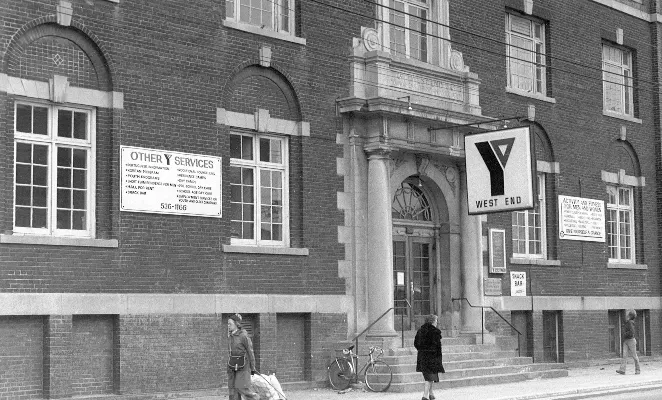
- The West End YMCA celebrated 100 years in the building on College Street at Dovercourt Road.
- The Toronto YMCA had international partnerships with Colombia, Ghana, Jamaica, Lebanon, Liberia, Mexico, Myanmar, and Senegal.
- The YMCA of Greater Toronto was awarded one of Canada's Best Diversity Employers and one of Canada's Top Employers for Young People by the Canada’s Top 100 Employers project.
2013
- YMCA of Greater Toronto celebrated its 160th anniversary.
- The YMCA of Greater Toronto launched its largest capital campaign ever, Strong Start, Great Future, to build 10 new Centres of Community.
- The YMCA announced the naming of the new Cooper Koo Cherry Street YMCA and a $2 million gift from Krystal Koo and Michael Cooper. The 82,000-square-foot site served as the athletic training facility for the 2015 Pan Am/Parapan Am Games and reopened as a YMCA in 2016.
2014
- TD Bank Group donated $1 million to the Toronto YMCA Strong Start Great Future capital campaign. Thanks to TD's donation, YMCA's newest locations included green technology, waste conservation initiatives, and energy retrofit projects.
- On November 5, 2014, Pepsico Canada Foundation was honoured for reaching $1 million in support at the 25th anniversary celebration of the Mississauga YMCA.
2015
- Opening its doors in 2015 to youth experiencing homelessness or street-involved, the holistic Toronto Vanauley Street YMCA Centre offered support services and emergency shelter to youth ages 16–24 living in vulnerable situations — all under one roof in the Queen West and Spadina community.
- The Y launched Next Stop Canada, an online program funded by Immigration, Refugees and Citizenship Canada (IRCC), which offers pre-settlement services to adults and youth.
- The YMCA participated in the federal Syrian Resettlement Initiative by prioritizing Syrian refugee clients in its federally and provincially funded settlement programs, and began a Newcomer Youth Leadership Development program for Syrian refugee youth.
2016
- The Cooper Koo Family YMCA opened in Toronto's Canary District.
- The YMCA of Greater Toronto was accredited under Imagine Canada's national Standards Program. With this achievement, it joined a growing community of more than 200 organizations dedicated to operational excellence.
- The YMCA of Greater Toronto announced the start of transitional housing support services for 2SLGBTQ+ youth experiencing homelessness in Toronto at YMCA Sprott House.
- YMCA Newcomer Information Centres celebrated a decade of service.
2017
- The YMCA of Greater Toronto officially broke ground on the 77,000-square-foot Vaughan Metropolitan Centre YMCA, scheduled to open in 2020.
- The YMCA broke ground on The McDonald Family YMCA, a 54,000-square-foot Centre of Community on Richmond Street West in Toronto, scheduled to open in 2021.
- The YMCA's Language Assessment & Referral Centre celebrated 25 years of service, and YMCA Newcomer Youth Leadership Development marked 10 years.
2018
- The YMCA of Greater Toronto celebrated 50 years of providing child care services.
- Former YMCA of Greater Toronto president and CEO Medhat Mahdy presented the first-ever President’s Peace Medal to Toronto Raptors president Masai Ujiri for his continued dedication to empowering youth and women in Toronto and abroad.
- The YMCA of Greater Toronto, in partnership with the Wellesley Institute, released its first detailed report of well-being in the Greater Toronto Area (GTA). Titled Life in the GTA: A Window on Well-being, the report is the first study to provide perspectives on well-being at the local GTA neighbourhood level. A second report, produced and released by the Y, found strong evidence that in neighbourhoods where there's a YMCA, there's better well-being for everyone, not just those individuals who use YMCA programs and services.
- The YMCA Community Action Network (YCAN) launched to engage young leaders across Canada and give them an opportunity to address community needs through service projects. The program, which was part of the Canada Service Corps Initiative funded by the Government of Canada, supports youth with opportunities to identify and execute a project that is meaningful to them.
- The YMCA Academy, supported by the YMCA of Greater Toronto, expanded beyond high school to middle school, with classes for students in Grade 7 and Grade 8.
- The YMCA of Greater Toronto elected a former Youth Advisory Committee (YAC) member to the Board of Directors for the first time. YAC provides governance input to the Board.
- The YMCA of Greater Toronto launched a new Diversity & Social Inclusion Strategy.
- The Central YMCA, at 20 Grosvenor Street, received the 2018 Prix du XXe siècle award from The Royal Architectural Institute of Canada (RAIC) and the National Trust for Canada at the RAIC Festival of Architecture in recognition of enduring excellence and significance to Canada’s architectural legacy.
- The Youth for Youth Gambling Education Program (Y4Y) launched. This provincial education and prevention initiative empowers young people to raise awareness about underage gambling, problem gambling, and available support resources. The Y4Y program engages adolescents ages 15–18 and young adults ages 19–24 through a gambling education competition.
2019
- The YMCA of Greater Toronto released its first Sustainability Report, informed by the Global Reporting Initiative (GRI) Sustainability Reporting Standards. Earlier in the year, the YMCA of Greater Toronto was named one of Canada’s Greenest Employers for the ninth year in a row.
- The Kingston Road YMCA Centre of Community, which broke ground in 2015, was renamed The Steve & Sally Stavro Family YMCA. The Y received a $1 million donation from the Steve & Sally Stavro Family Foundation in support of the new centre, set to open in 2020. The renaming was also supported with a $2 million gift from an anonymous donor and numerous contributions from additional donors.
- The YMCA of Greater Toronto celebrated 75 years of delivering YMCA Career Planning services.
- The YMCA of Greater Toronto’s Next Stop Canada, a program funded by Immigration, Refugees, and Citizenship Canada (IRCC) that offers pre-settlement services, was selected to play a new national coordination role.
- The YMCA Language Assessment & Referral Centre assessed its 500,000th newcomer client.
1976
- Months of discussions between the YMCA of Metropolitan Toronto and Oakville YMCA/YWCA led to the creation of the Central Ontario Lakeshore Y (COLY) on May 13, 1976. Municipalities served by COLY included: Halton, Peel, York, Durham, and Metropolitan Toronto.
- The West End Y offered programs to Portuguese Canadians, many of whom lived nearby.
1977
- On June 27, programs for Korean Canadians began at the West End YMCA. They were made possible by a grant from the Ministry of Culture and Recreation.
1980
- North York Mayor Mel Lastman and MPP the Hon. Bette Stephenson attended the opening ceremonies of the North York YMCA at 567 Sheppard Avenue East on Saturday, March 29, 1980.
- Camp Pine Crest became a co-educational camp.
1981
- The Canadian YMCA Fellowship of Honour was created under the patronage of the Governor General of Canada. It recognizes outstanding volunteers and employees from across Canada. Several volunteers and staff members from the YMCA of Greater Toronto have received the award over the years.
1982
- The opening ceremonies of the newly renovated West End YMCA took place on April 3, 1982. The building was partially closed in 1980 and 1981 so that it could be completely gutted, refurbished, and re-equipped.
1983
- Child Care: The Toronto YMCA provided 2.7 million hours of child care at more than 140 sites in the Metropolitan Toronto area.
- Women and girls represented 59 per cent of participants at the Toronto YMCA, according to the President's speech recorded in the YMCA's 1983 Annual Meeting Minutes.
1984
- The new Metro Central YMCA opened at 20 Grosvenor Street, two blocks north of the previous location on College Street, which was sold to the Metropolitan Toronto Police.
- YMCAs across Canada initiated an annual program to commemorate World YMCA Peace Week. YMCAs began to actively engage communities in programs to explore peace-building, promote peace education, and highlight peace movements in local and global communities.
- Effective June 1, 1984, COLY's net assets and operations were transferred to the YMCA of Metropolitan Toronto.
1985
- In 1985–1986, the Y extended its new Full-Day Kinder Camp service, offering preschool campers a wide variety of skills and preparing them for subsequent years of Y camping.
- A federally funded Job Generation program started, training unemployed young people ages 17-25 for positions in food service. The 16-week course, at 15 Robina Avenue, taught professional food-preparation skills and offered life-skills coaching and on-the-job training.
- In July, the YMCA Community and Youth Services Department opened its new Youth Substance Abuse Centre (YSAP) at 137 Jarvis Street, near Queen Street East. The centre provided counselling and outpatient treatment for youth ages 16 to 24 by providing an overall approach to abuse treatment. There were 982 registered participants, according to the 1989–1990 Toronto YMCA annual report.
- The Y’s Prime Tyme Class, for members 55 and older, started at Metro Central in October 1985. It offered a range of aerobic exercises designed for all fitness levels, including walking, jogging, and biking. Those with a limited range of motion did chair work while others used mats.
1986
- Toronto YMCA Mission Statement:
"The YMCA of Metropolitan Toronto is an independent association of volunteers and professionals whose purpose is to offer people opportunities for personal growth and service to others. In pursuit of this goal, the association provides quality programs, which promote self-improvement and self-reliance through spiritual, mental, and physical development. The programs of the YMCA are open to everyone regardless of race, sex, creed, or economic circumstance." - YMCA House opened on Queen Street West as an emergency and short-term shelter for men in need, ages 15–24. Meals, one-on-one case management support, and employment and education counselling were eventually also offered.
1987
- The YMCA Youth Enterprise Centre opened in the YMCA facility on Robina Avenue. The primary goal was to assist new entrepreneurs ages 30 and younger to develop and successfully operate their own small businesses. This was the first national self-employment program sponsored by Human Resources Development Canada.
1989
- The official opening ceremony of the new building of the Mississauga YMCA was held on November 24, 1989. The branch was located at 325 Burnhamthorpe Road West, Mississauga. Among the guests were the Hon. Steven Offer, Solicitor General of Ontario; Her Worship Hazel McCallion, the Mayor of Mississauga; and Rich Bailey, CEO of YMCA Canada.
1990
- The new Scarborough YMCA building opened on March 2, 1990, at 230 Town Centre Court.
- To help cope with the increasing number of plant closures, the YMCA created the Employment Adjustment Program as part of Adult Employment Services. It was run in coordination with the Ministry of Labour’s Employment Adjustment Branch.
1992
- The name of the Toronto YMCA was changed to the YMCA of Greater Toronto when a Board motion passed on September 15, 1992.
- The YMCA of Greater Toronto Black Achievers Program began in September 1992. It was based on the Harlem Black Achievers model. Participants received a wide range of professional and educational opportunities, and they were connected with mentors.
- In June, Brampton YMCA joined the Toronto YMCA.
- A partnership with the YMCA of Medellín, Colombia, began.
1993
- YMCA of Greater Toronto Child Care celebrated 25 years of licensed operation.
1994
- In June 1994, the YMCA's Board unanimously approved the report Delivering Our Vision: Strategic Outcomes.
New Mission Statement: The YMCA of Greater Toronto is a charitable association offering opportunities for personal growth and service to others.
New Vision Statement: The YMCA will offer high-quality programs at the heart of a healthy community.
1995
- At Camp Pine Crest, the old dining hall was replaced by a new camper-friendly building called Kekindewin, which in the Ojibwe language means: “a promise to gather again”. It was designed as an environmentally friendly space that could be used for many other activities and became “the functional heart of the Camp.”
1996
- The YMCA Enterprise Centre celebrated its 10th anniversary. It was reported that three years after starting the program, 80% of participants were still in business. More than 900 businesses were started.
1997
- The Etobicoke YMCA Youth Employment Services announced the opening of the Rexdale Youth Resource Centre. This initiative was funded by Human Resource Development Canada.
1998
- The Brampton YMCA opened a new Centre of Community at 20 Union Street. A night of recognition and celebration was held on April 4, 1998.
- The YMCA Family Development Centre was launched in September 1998 in downtown Toronto. It supported families in an integrated and accessible setting. 280 family members received parenting services and found a resource centre for themselves, their family, and their community. Programs ranged from drama and music to nutrition and infant massage.
1953
- Funds from the 1947 fundraising campaign helped to build several YMCA community branches:
- The Northwestern YMCA building opened in April at 2547 Eglinton Avenue West at Scott Road, near Keele Street. It became part of the North York YMCA in 1967.
- The formal opening of the updated St Clair YMCA building also occurred in April. In 1973, it was renamed the Harriet Tubman Centre.
- The Lakeshore YMCA-YWCA building opened in May. The building at 945 Lakeshore Road, New Toronto, was vacated in the summer of 1968 and listed for sale.
- The North Toronto YMCA building opened in September at 130 Eglinton Avenue East. The building was sold in the 1970s.
- The Toronto East YMCA building opened at 907 Kingston Road and would be used as a YMCA child care centre for many years. As of 2015, the property was to be developed as a full-service centre with condominiums above, as part of the Strong Start Great Future campaign.
- In 1953, the Toronto YMCA operated 14 day camps with 3,022 registered boys and girls.
1954
- A new Constitution and By-Laws for the Toronto YMCA were adopted on September 22, 1954, replacing the 1923 Constitution.
- The Broadview YMCA organized swimming programs that included women. A Ladies Swim Club with women instructors met twice weekly, and one of the classes focused on lifesaving techniques. A Saturday night Family Swim program also started.
- The 1954 Toronto YMCA Annual Report reported the following: "Pioneered by the Y.M.C.A., the Day Camp idea has been taken up by many other organizations as a worthwhile summer activity for boys and girls."
- Hurricane Hazel hit Southern Ontario on October 15, 1954. Heavy rains that preceded it damaged three Toronto YMCA centres, including the Etobicoke branch, where the basement flooded. After the floodwaters were pumped out, the building was used as a headquarters for military personnel managing a clothing distribution centre, and for food and drink preparation for refugees and hurricane relief workers.
1956
- Camp Wangoma, a summer camp for boys, opened on Lake Wannamaker near Bancroft, Ontario. It was run by the East York YMCA and replaced Camp Sunfish on Lake Simcoe, which closed in 1955. The last year of operation for the camp was 1978, and the property was sold in 1982.
1957
- Courtesy of CHUM radio station in Toronto, a 15-minute YMCA radio broadcast, Y Time, aired on Sunday evenings. YMCA members who received training through a radio workshop produced the broadcast.
1959
- A North Toronto YMCA committee initiated the process that eventually led to the establishment of York University. It was organized as an independent entity, separate from the YMCA.
- Dr. Murray G. Ross was appointed as the founding President of York University. He had had a long association with the Canadian YMCA as a staff member.
- Dr. Ross was the author of:
- The Y.M.C.A. in Canada: The Chronology of a Century (1951)
- The Toronto Y.M.C.A. in a Changing Community 1864-1940 (M.A. thesis, 1947)
1962
- The Canadian YMCA Youth Fund raised $2.1 million for nationwide projects in Canada, including a new National Council (YMCA Canada) headquarters at 2160 Yonge Street in Toronto.
1963
- The Toronto Central Lions Club sold the lease for Camp Beausoleil on Beausoleil Island in Georgian Bay to the Toronto YMCA for the sum of $2. The camp was closed in 1981.
- The three Branch Boards of the Broadview, East York, and Toronto East YMCAs amalgamated to form the Eastview Branch.
1964
- Street work with alienated teenage youth was significantly expanded by the Toronto YMCA. Full-time detached youth workers were now related to the North Toronto, Eastview, and Central branches.
- Women increasingly participated in the YMCA's physical fitness programs, and branches recorded coeducational classes.
1965
- The Toronto YMCA Camping Branch was officially formed by action of the Executive Board on February 23, 1965. The summer camps that became part of the branch were Camp Pine Crest, Camp Beausoleil, and Camp Wangoma.
- The Westwood YMCA was established when the St Clair and High Park branches amalgamated.
1967
- Cedar Park Club at Masaryktown in Scarborough, an outdoor YMCA for families, was officially opened in February.
1968
- Licensed Child Care began at the Toronto YMCA. The Parkway Forest Jr. YMCA preschool child care centre opened, south of Sheppard Avenue near Don Mills Road. The building was used until 2015 when it was replaced by a new purpose-built centre close by.
- The York Conference was held at York University in Toronto — the first national conference ever held by the Canadian YMCA.
1969
- On February 3, 1969, the Rotary Club of Toronto, with the assistance of the Toronto Y, began a new Youth Employment Service (Y.E.S.). It was a collaboration between Toronto YMCA, service and social agencies, business, and industry.
- The Toronto Y's second apartment project was established in the Cadillac Parkway Forest apartment complex east of Don Mills Road and south of Sheppard Avenue, starting on November 1, 1969. Programs were set up for the recreation and leisure time needs of 2,000 families living in the complex.
1970
- A joint partnership of the Addiction Research Foundation and the Toronto YMCA called the “12 Madison Project” was organized to meet mutual goals relating to youth and drugs in Toronto. The project involved the development of drug education programs with school boards and community organizations.
1971
- The name of the Toronto Y was changed from the Toronto Young Men’s Christian Association to The Young Men’s Christian Association of Metropolitan Toronto. The Board approved the change on April 8, 1971.
1973
- The Board of the Metropolitan Toronto YMCA initiated a long-range financial development campaign called Investment in Values, which helped to transform the Toronto YMCA. It resulted in the building of four new full-service program centres, including North York (1980), Metro Central (1984), Mississauga (1989), and Scarborough (1990). The plan also called for a major renovation of the West End YMCA (1982).
- The West End Y, with the assistance of the Laidlaw Foundation, the Department of National Health and Welfare, and the Police Department, opened the first “all Black Youth Centre” at 15 Robina Avenue. It was known as the Harriet Tubman Centre. All programs were aimed at Black youth and, in particular, West Indian immigrant youth.
- A Mobile Fitness Centre began operation. The Centre’s staff spoke to over 18,000 Torontonians in less than three and a half months in 1973.
1975
- The Scarborough YMCA began a one-year contract with the Scarborough Board of Education to direct a lunchtime program in 30 schools.
- The Broadview YMCA introduced a new tap dancing program for boys and girls, and held a Saturday Sports College with activities such as judo, gymnastics, and volleyball, followed by a swim.
1926
- The Central YMCA Branch offered early morning radio broadcasts that included physical drills and health talks.
1928
- The Danforth branch of the Toronto YMCA, started and originally financed by the Toronto Rotary Club in 1925, was organized as a branch of the Toronto YMCA in 1928. It used rented spaces until 1949 when the Danforth–East York building was opened at 900 Coxwell Avenue in East York.
- Camp Norval, run by the West End YMCA, opened on the upper branch of the Credit River. The land for the camp was a gift from Morden Neilson, the ice cream and chocolate magnate. He was a long-time member of the West End Y and was its President in 1925 and 1926. An above-ground swimming pool was built as the Credit River was not deep or wide enough to swim in. The property was sold in the late 1980s.
1930
- 80 per cent of the participants in the programs of the Toronto YMCA were younger than 21.
1931
- Foster Hewitt broadcast West End YMCA basketball games over the Toronto Daily Star’s radio station CFCA.
- The 1931 Annual Report lists the following Toronto YMCA branches: Broadview, Central, Danforth, St Clair, West End, West Toronto, East Toronto Railway YMCA, Mimico Railway YMCA, the Toronto Military Orthopedic Hospital (known as "the Christie Street Hospital" to locals), and Summer Camps.
1933
- 462 boys were taught to swim during the West End YMCA's Free Swimming Campaign, in collaboration with the Daily Star and Evening Telegram.
1934
- The Toronto YMCA, in partnership with the Toronto City Council and the Public Welfare Department, offered programs for the unemployed in city-operated hostels and in Toronto YMCA centres.
- 1,275 unemployed members continued in full membership at the Toronto YMCA, even though they were unable to pay fees.
- 223 fatherless boys were given special attention in addition to full membership privileges without charge.
- The Toronto YMCA and the Rotary Club of Toronto celebrated 10 years of partnership. The Y also worked with the Kiwanis, Progress, and Lions clubs.
1935
- The Toronto YMCA, in collaboration with the Rotary Club, served 4,000 boys in the Silverthorn area.
- 1,375 boys and young men were taught to swim in 1935.
1936
- Girls were invited to participate in the Broadview Boys’ Fall Fair for the first time.
1937
- A radio program on Vocational Guidance featured 12 weekly broadcasts on Station CKCL. The Board of Education directed all principals to notify their students of these broadcasts.
1939
- At the start of the Second World War, full membership privileges for the Toronto YMCA were offered to enlisted men at no cost. More than 6,000 men accessed Toronto YMCA buildings each month.
1940
- Sons of enlisted Canadian soldiers enjoyed stays at several Toronto YMCA camps at no cost to the boys or their families.
- 116 sons attended a special camp at Camp Sunfish, where the entire staff volunteered their services.
- In collaboration with the West Toronto Kiwanis Club, 90 enlisted soldiers' sons went to Westowanis Camp. The Women’s Auxiliary of the West End Y sent 18 to Camp Norval and 35 to the Indoor Camp at the West End.
1941
- Just like during the First World War, the Central YMCA opened the Red Triangle Club, a Leave Centre for enlisted men on October 17 at 504 Jarvis Street.
- At the Annual Meeting of the Toronto YMCA, General Secretary Dr. George S. Patterson reported that about 350 soldiers visited the Broadview, Central, and West End branches daily.
1946
- The Red Triangle Club in Toronto closed in May.
1942
- The Northwestern Community YMCA was organized, and a Board was inaugurated in November at a meeting held in the West End YMCA. The branch came about as an outgrowth of work carried on by the Rotary Club in the Silverthorn area from 1929 to 1942. A building was opened in 1953.
1943
- The Lakeshore YMCA community branch in New Toronto was organized. Wesley United Church on Station Road and Mimico Avenue was used as its first headquarters. A Board was approved in 1944.
- YMCA work initiated in East Toronto as a community extension project of the Broadview Branch. It became a self-operated branch under the Toronto East Community YMCA name in 1949 and operated out of a portable building on the grounds of Malvern Collegiate.
1946
- October 30, 1946: The Toronto Huskies basketball team practised at our original Central YMCA location before participating in the first National Basketball Association (NBA) game in history.
1947
- Due to the growth and redistribution of Toronto's population, the Toronto YMCA and Toronto YWCA undertook a special fundraising campaign that would raise $2.1 million.
- Campaign objectives included: building new community-type branches, a new YWCA residence, and a 300-room YMCA residence annex of the Central Y; reconditioning and modernizing the Broadview, Central, and West End branches; and making a $100,000 donation to the World Youth Fund.
1948
- The Etobicoke YMCA-YWCA was organized as a community branch of the Toronto YMCA. A temporary office was located above a real estate firm on Bloor Street.
1949
- The Danforth-East York YMCA building was opened in October at 900 Coxwell Avenue.
- The Toronto YMCA Counselling Service was certified as an approved agency – perhaps the first in Toronto to secure this approval.
1950
- The Etobicoke YMCA-YWCA building at 3226 Bloor Street West officially opened in February. In March of 1974, the Toronto YMCA bought the YWCA's share of the property, and the building was sold in 1980.
1900
- Howard Crocker began work in September as the new Physical Director at the Central YMCA.
- Leaders Corps: One of the first things that Howard Crocker did as Physical Director at the Central YMCA was to organize a Leaders Corps, which was to become a model for other YMCAs across Canada.
- Annual Dues in 1900:
- Limited Membership, $2: Use of the Reading Room, Parlours, Social Privileges, Debating Society, and Chess Club.
- Educational Ticket, $3: Covered all of the above and the Evening School (on payment of class fees).
- Full Ticket, $5: Covered all of the above and the Gymnasium, Bowling Alley, and Baths.
- Sustaining Ticket, $10 and over: Covered all of the above, the use of the gymnasium lockers, and admission to any of the educational classes (excluding French, German, and elocution). This ticket is intended for businessmen and others who desire to help in the financial support of the Association.
1901
- In 1901, Howard Crocker conducted the first summer school in physical work in Toronto for 14 YMCA physical directors. Football, lacrosse, basketball, and tennis were the leading summer program features.
1902
- The Broadview Boys’ Fall Fair first opened in 1902 as part of the program offered by the Broadview Boys’ Institute under the direction of C. J. Atkinson. When the institute amalgamated with the Toronto YMCA in 1910, the fair continued to take place on the Broadview YMCA property until the First World War.
1904
- Membership numbers: 2,101 members were registered at the Central Association, 860 at the West End Branch, 138 at the East Toronto Railway Branch, and 215 in the City Railroad Branch.
1905
- Camp Couchiching on Lake Couchiching, near Orillia, opened. It was the first overnight camp organized by the Toronto YMCA.
1906
- In 1906, the Grand Trunk Railway moved its rail yards from East Toronto to Mimico, and as a result, the Mimico Railway YMCA was organized nearby to support the railway workers. The Toronto YMCA continued to run this branch until 1965.
1908
- 1908 London Olympics:
- Ed Archibald, a member of the West End YMCA, was the flag-bearer for the Canadian team at the 1908 Olympic Games in London. He won a bronze medal in the pole vault competition.
- Howard Crocker, the Physical Director at the Central YMCA, was the manager of the Canadian Olympic team.
1909
- An Act to Incorporate the Toronto West End YMCA was passed in April 1909 by the Legislative Assembly of the Province of Ontario.
1910
- 1910 Fundraising Campaign: Under the leadership of George Warburton, the Toronto YMCA undertook a major fundraising campaign and raised $807,023.06 in less than two weeks. As a result of the campaign three new YMCA centres in Toronto were built – the Broadview Y, a new Central Y building and a new West End Y building along with a YWCA building.
- The Broadview Boys’ Institute amalgamated with the Toronto YMCA to become the Broadview YMCA. C. J. Atkinson who had founded the Institute remained in charge.
- Camp Pine Crest opened as a Toronto YMCA overnight camp on Clear Lake near Torrance. It had roots in the Broadview Boys’ Institute camping tradition going back to 1896.
- The first national YMCA swimming instruction program was launched
1911
- The laying of the cornerstone of the new Broadview YMCA building by Governor General Earl Grey took place on May 24, 1911.
- An Employment Department was organized by the Toronto YMCA in June 1911 to serve young men who were seeking jobs.
- By the end of April 1912, of the 1,404 men who had registered, 555 were assigned to positions.
- This department was considered to be a forerunner of the National Employment Service branch of the federal government, created in 1918.
- At the Broadview YMCA, the YMCA Automobile School opened on October 9, 1911. It was organized in cooperation with the Ontario Motor League. Practical courses in automobile construction, operation, and care were offered. The school ran until May 1, 1914.
- Industrial Work: In 1911, the West End YMCA began reaching out to young men working in industry in Toronto's west end. 16 factories were served in 1914, increasing to 117 in 1925. The work included organizing noon-hour athletics, Industrial Bowling Leagues where factories competed against each other, educational lectures, health talks, and movie screenings.
1912
- As a result of the 1910 fundraising campaign, the Toronto YMCA opened two new centres and Prime Minister Borden laid a cornerstone for another:
- March 2: The Broadview YMCA building on Broadview Ave. was officially opened.
- May 14: The laying of the cornerstone of the new Central YMCA building on College St. by the Rt. Hon. Robert Borden, Prime Minister of Canada, took place.
- October 1: The second West End YMCA building on College Street by Dovercourt Road was officially opened by Sir John Gibson, the Lieutenant Governor of Ontario.
- George Goulding, a member of the Toronto Central YMCA branch, won the Gold Medal in the 10 km walk at the Summer Olympics held in Stockholm in July.
- The National Council of the Canadian YMCA (YMCA Canada) was organized as the national office of the Canadian YMCA. It replaced various provincial committees, and an office was set up in Toronto.
1913
- The new Central YMCA building on College St opened.
1914
- Teaching English to new Canadians was one of the outstanding features of the West End YMCA. 60 classes met weekly in shops, halls, and homes with a total enrolment of 1,200.
1915
- During the winter over 10,000 soldiers made use of the bathing facilities and other privileges of the West End YMCA.
- The National Council of the Canadian YMCA (YMCA Canada) invited the Toronto YMCA to undertake work among the soldiers being recruited and trained in Toronto. Much of that work would take place on the Exhibition Grounds.
1917
- The first Red Triangle Club in Canada opened in Toronto in April 1917 at the corner of Queen and Victoria streets. In addition to serving as an inexpensive hotel, it provided a convenient place for returning and convalescing soldiers, as well as those on leave, to store belongings while passing through Toronto. The building contained a writing room, a music and billiards room, and a cafeteria.
1919 (WWI)
- Nearly 800 six-month free memberships were presented to soldiers returning from the First World War.
1919
- Camp Sunfish opened on Sunfish Island, now known as Algonquin Island, one of the Toronto Islands. Initially, the camp served employed boys. In the 1940s, it moved to the west side of Lake Simcoe in the Township of Innisfil and remained there until 1955, when the property was sold due to encroaching cottage development.
- The Boys' Dept. of the West End YMCA had a record membership of over 3,000, the largest boys' membership of any Association in the world.
1921
- Camp CENYMCA, short for Central YMCA, opened on Wards Island, one of the Toronto Islands.
1922
- The Toronto YMCA took over The Christie Street Military Hospital program for returning soldiers from the National Council of the Canadian YMCA following the First World War. The Toronto YMCA continued to organize programs for ex-service members until the early 1930s, when the program ended. In 1929, between 300 and 350 veterans were still receiving support.
1923
- The Toronto YMCA and the Toronto West End YMCA joined together again after separating in 1908. An Act to Incorporate the Toronto Young Men’s Christian Association was passed by the Ontario Legislature in March 1923.
- The West Toronto Community YMCA was organized as a result of collaboration with the West Toronto Kiwanis Club. As it was a community branch, the secretary in charge organized activities, mainly for boys, in local school gymnasiums, classrooms, and city parks, where softball and rugby games could take place.
1924
- George Corsan Sr. directed a citywide swimming instruction campaign. J. E. Atkinson, publisher of the Toronto Star, assumed financial responsibility for the campaign.
1851
- Before the invention of the light bulb or telephone, even before Confederation, the first YMCA in North America opened in Montreal, Quebec, on November 25, 1851. At first, YMCAs had strong links to Protestant churches, but this quickly changed as people from all churches were welcomed. Today, the YMCA welcomes all people regardless of religion, age, background, or ability.
1853
- John Holland organized a Toronto YMCA at his house on King Street. A Constitution and Bylaws were adopted on December 20, 1853, and meetings were thereafter held in the Toronto Mechanics’ Institute.
1855
- January 9, 1855: The Constitution and Bylaws of the Toronto YMCA were revised.
- April 1855: Because a clear position against slavery was not taken, the Toronto YMCA withdrew from the North American YMCA Confederation in protest.
1864
- The Toronto YMCA was reorganized as a non-denominational YMCA. Robert Baldwin became the first President (Board Chair) of the reorganized Toronto YMCA in February 1864. Born in Toronto, he was the son of the Hon. Robert Baldwin, one of the fathers of responsible government in Canada.
1868
- An Act to Incorporate the Toronto YMCA was assented to by the Legislative Assembly of Ontario on March 4, 1868.
1873
- Shaftesbury Hall, the first purpose-built centre owned by the Toronto YMCA, opened on February 10, 1873, at Queen Street West near James Street. It contained two halls that could be rented, a gymnasium/exercise room, offices, several classrooms, and a library.
- On February 20, the YWCA of Toronto held its first meeting at Shaftesbury Hall.
- Organized in 1871, the first YMCA Association was officially recognized at the University of Toronto, at University College.
1876
- The Toronto YMCA began outreach work with railway workers through meetings at Union Station. Collaborative railway YMCA branches were soon established, with programs organized by the Toronto YMCA and building spaces provided and owned by railway companies. YMCA programs broadened in scope once branch buildings were established.
1879
- Professor J. Douglas Andrews was hired as an instructor in the gymnasium with a mission to help young men "develop the physical man." As a result, about 200 young men joined the YMCA.
1881
- At Shaftesbury Hall, a class was offered for the small Chinese community in Toronto. Participants attended classes to learn English reading and writing skills.
1882
- The West End YMCA was organized under the "Railway and West End YMCA" name. Rooms were rented at 1020 Queen Street West.
- The Toronto YMCA Board closed the gymnasium in Shaftesbury Hall. In a Shaftesbury Hall Bulletin, an announcement reported: “Our Gymnasium has not proved to be all that had been hoped for.” The room was then leased to the Toronto Coffee House Association. About five years later, a well-equipped gymnasium opened in the Toronto YMCA building that replaced Shaftesbury Hall.
1883
- April 22, 1883: The official opening of the Railway and West End YMCA was held.
1886
- Shaftesbury Hall was sold, as it wasn't large enough to accommodate all YMCA members and programs.
- The University of Toronto student YMCA opened a building on campus near the northwest corner of College Street and University Avenue.
1887
- To replace Shaftesbury Hall, a much larger building was constructed at the corner of Yonge and McGill streets. It was dedicated on November 3, 1887, and soon came to be known as the Central YMCA. It included a large auditorium, known as Association Hall, which was rented when not in use by the Y. The building also contained the first indoor YMCA pool in Canada. The gymnasium was considered one of the finest in North America.
1890
- A North West YMCA branch was organized in March at 484 Spadina Avenue. In April 1893, the Board decided to sell the property.
- The East Toronto Railway branch opened a building near York Railway Station at Main Street and Danforth Avenue. It remained a railway YMCA branch until 1909, when the Grand Trunk Railway moved its rail yards west to Mimico.
1891
- The YMCA's red triangle logo, representing wellness of spirit, mind, and body, was developed and introduced by Luther Gulick, a teacher at the YMCA Training School in Springfield, Massachusetts.
1892
- Basketball was introduced to Toronto in 1892, just a few months after it was invented by Canadian-born Dr. James Naismith at the YMCA Training School in Springfield, Massachusetts, on December 21, 1891.
The first basketball game in Toronto was played in the gymnasium of the Central YMCA building on Yonge Street in 1892. - The first reference to basketball in Toronto was recorded in the Central YMCA Gymnasium Committee Minutes and the Toronto YMCA Board Minutes when an appropriation of $25 was requested to cover the gymnasium windows with wire netting: "in view of the introduction of basketball."
- Fencing was introduced to the Central YMCA gymnasium and proved to be a popular sport. The Central YMCA team won the Team Championship of Canada in 1911.
1895
- The Toronto YMCA launched the Association Evening College for young men who were eager to attend classes but worked during the day.
Classes included: - penmanship
- bookkeeping
- business arithmetic
- electricity (with practical bench work)
- mechanical drawing
- freehand drawing
- light carpentry
- vocal music
- Canadian Constitution
- English literature
- English composition
- Approximately 100 medical examinations were completed, according to the Toronto YMCA Physical Department Committee. City physicians at Central YMCA presented four medical talks to members during the year.
1897
- The City Railway YMCA branch opened in a building at the foot of Spadina Avenue that was fitted out by the Grand Trunk Railway. It included a restaurant, a dormitory, and a small gym. The branch remained in operation until the fall of 1909.
1898
- The game of handball was added to the programming at Central YMCA.
You May Also Like
About the YMCA of Greater Toronto
Our Impact